
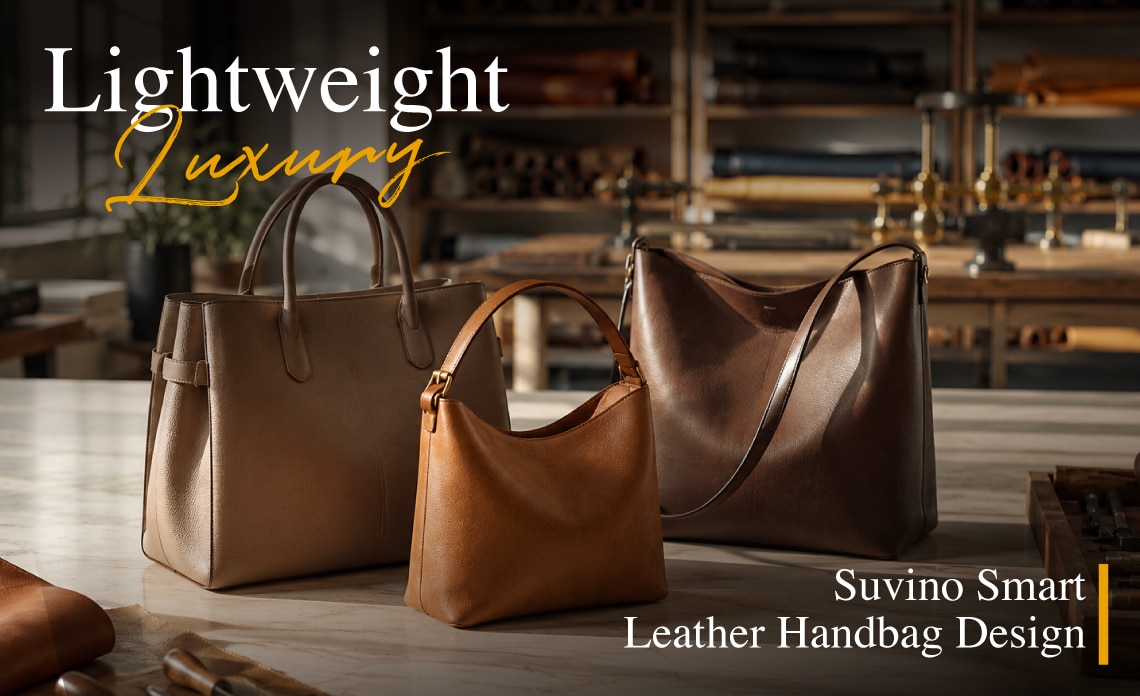
For global fashion brands, creating a premium leather bag is no longer just about aesthetics; it is about balancing high-end material selection with functional ergonomics. While thick leather and solid hardware appear luxurious, they often result in an excessively heavy product that compromises consumer carrying comfort.
In this technical guide, Suvino explores the advanced manufacturing frameworks, ranging from precision leather splitting and edge skiving to lightweight internal structural engineering, that enable modern brands to deliver premium leather goods that are as comfortable as they are beautiful.
Why Premium Leather Handbags Feel Too Heavy
Excessive handbag weight is typically caused by inefficient material thickness, over-reinforced backing systems, and unoptimized hardware selections in leather goods manufacturing. When fashion brands scale their production without consulting a specialized OEM partner, they often fall into manufacturing traps that compromise daily wearability.
- The Misconception of Hide Thickness and Luxury Quality
Luxury leather quality is determined by grain integrity, fiber density, and the tanning process, not by thickness alone. In handbag design, using raw hides that are unnecessarily thick adds dead weight to a leather bag, especially when assembling multi-layered panels. Experienced manufacturers evaluate the structural demands of each individual component and split the hide to its optimal substance level before production begins.
- Over-Reinforcement: The Trap of Heavy Internal Backing
Over-reinforcement happens when a factory uses dense cardboard or fiberboard throughout the entire body of a bag to maintain its shape. While structural rigidity is necessary, applying heavy backing across non-critical panels creates bulk and discomfort.
Modern handbag engineering utilizes targeted reinforcement at critical stress points, preserving the architectural silhouette while dramatically lowering weight.
- Heavy Hardware Choices That Compromise Daily Wearability
Solid metal hardware can contribute up to 30% to 50% of a luxury handbag’s total unladen weight. Massive solid-zinc buckles, decorative heavy brass chains, and oversized locks degrade everyday ergonomics. To preserve premium aesthetics without adding physical strain, high-end brands are transitioning toward engineered lightweight hardware solutions.
At Suvino, we believe that exceptional leather goods should be as comfortable as they are beautiful. That’s why we continuously refine every detail, from hardware selection to structural engineering, to help fashion brands create lightweight luxury handbags that stand out in both design and performance.
Advanced Splitting & Skiving for Weight Control
Advanced leather splitting and precision edge skiving are the core foundational techniques used to reduce physical weight while maintaining structural premium appeal. These sub-surface operations ensure that leather components flow seamlessly together without structural bulk.
- Precision Leather Splitting: Achieving the Perfect Substance
Professional OEM manufacturing demands that a single leather bag utilizes multiple thickness levels across its different components. Splitting raw hides into exact millimeter tolerances optimizes both panel flexibility and structural integrity.
Typical leather thickness recommendations include:
| Handbag Component | Recommended Thickness | Functional Engineering Reason |
| Handles | 1.8 – 2.2 mm | Requires maximum tensile strength and load-bearing durability. |
| Body Panels | 1.2 – 1.6 mm | Balances premium hand-feel with weight reduction. |
| Interior Pockets | 0.8 – 1.0 mm | Minimizes internal bulk and maximizes pocket usability. |
| Gussets | 1.0 – 1.4 mm | Optimizes side-panel flexibility and folding clean lines. |
- Handbag Design in Technical Edge Skiving to Reduce Bulk Without Losing Strength
Handbag Design involves edge skiving, which is the precise mechanical tapering of leather edges along seams, folds, and joining points. Without technical skiving, overlapping leather panels create thick, bulky seams that disrupt stitching accuracy and add unnecessary edge weight. Specialized skiving machines allow craftsmen to shave down edge parameters to a fraction of a millimeter, ensuring clean construction and high-performance stitch lines.
- Balancing Material Yield Efficiency with Target Weight
Weight optimization should always be balanced with leather yield efficiency to prevent soaring manufacturing costs. During the prototyping phase, a skilled factory analyzes pattern placement on the hide. By matching specific structural patterns with naturally lighter or denser sections of the leather skin, brands can achieve their target weight goals while minimizing material waste.
Internal Structural Engineering for Luxury Bag
Creating a lightweight luxury handbag is not simply about reducing leather thickness. The real innovation often happens beneath the surface. Internal structural engineering determines how a bag maintains its shape, performs during daily use, and delivers long-term durability without unnecessary weight.
To achieve this balance, manufacturers typically focus on 3 key areas:
- Reinforcement materials
- Hardware construction
- Interior lining systems
- Replacing Heavy Board with Advanced Lightweight Foams
Advanced lightweight microcellular foams are replacing traditional fiberboard and cardboard as the primary structural stabilizer in luxury bags. Traditional boards add dead weight and break down permanently if exposed to moisture.
In contrast, modern engineered foams reduce reinforcement weight by up to 60%, offer excellent shape memory retention, and provide superior resistance to ambient moisture.
- Hardware Architecture: Hollow Cores and Custom Alloys
Smart hardware architecture utilizes custom hollow-core construction and lightweight alloys to mimic the premium look of solid metal without the mass. By engineering custom metal fittings, luxury brands maintain identical surface plating quality while protecting the user from carrying strain.
Common lightweight hardware solutions include:
| Component | Traditional Hardware | Lightweight Alternative |
| D-Rings / O-Rings | Solid Heavy Brass | Hollow-Core Structural Brass / Alloy |
| Buckle / Clasps | Solid Die-Cast Zinc Alloy | Hollow Zinc / High-Tensile Machined Aluminum |
| Branding Plates | Thick Cast Metal | Precision Laser-Etched Thin Stainless Steel |
| Decorative Chains | Solid Iron / Heavy Brass | High-Polished Lightweight Aluminum Alloy |
These alternatives offer several advantages:
- Reduce the total handbag weight
- Improve carrying comfort for daily use
- Minimize strain on leather attachment points
- Maintain a premium appearance
- Support modern lightweight handbag design strategies
- Interior Lining Matrix: Luxury Feel Without Added Grams
The interior lining matrix must be selected strategically based on the bag’s structural design to prevent interior drag and added weight. While heavy suede linings look premium, they add substantial weight to large totes or oversized shoppers. Utilizing premium lightweight options like high-grade bonded microfibers, lightweight satins, or optimized thin lambskin preserves an ultra-luxurious touch while cutting down internal weight parameters.
Frequently Asked Questions
Q: Can I reduce the weight of my handbag design without changing its overall appearance?
Yes. You can easily reduce a handbag’s weight without altering its silhouette by re-engineering its hidden internal architecture. An experienced OEM manufacturer can swap out traditional heavy fiberboards for advanced lightweight structural foams, split interior leather panels to a lower thickness, and introduce hollow-core hardware fittings while preserving your exact original design aesthetic.
Q: At what stage should a fashion brand discuss weight optimization with the manufacturer?
Ideally, weight optimization should be discussed during the early handbag design stage. This allows the manufacturer to recommend suitable leather thickness, hardware specifications, lining materials, and structural components before sampling begins. Early planning helps reduce development costs and prevents design revisions later in the production process.
Q: Can Suvino modify and optimize an existing bag collection that feels too heavy?
Absolutely. Suvino specializes in technical product development and can analyze your current prototypes to optimize their weight. Our engineering team will review your existing product’s internal reinforcements, edge seams, and hardware selections, substituting heavy components with premium, lightweight luxury alternatives to improve everyday wearability.
Partner with Suvino for Lightweight Leather Goods
Developing a lightweight luxury handbag requires more than premium materials. It demands technical expertise, manufacturing precision, and a deep understanding of leather engineering. From material selection and pattern development to hardware optimization and structural design, every stage influences the final product’s performance.
For fashion brands looking for an OEM partner that combines craftsmanship with technical innovation, Suvino offers comprehensive solutions tailored to modern luxury markets.
- Turning Heavy Design Concepts into Lightweight Masterpieces
Bringing a sophisticated leather bag concept to life requires more than standard assembly; it demands specialized technical engineering. At Suvino, we bridge the gap between creative design vision and physical comfort through precision leather processing, advanced material alternatives, and a rigorous approach to weight management that never compromises on your brand’s luxury positioning.
At Suvino, we help brands bridge the gap between design vision and manufacturing reality through:
- Advanced leather splitting and precision skiving technology
- Lightweight structural engineering expertise
- Premium leather sourcing and material development
- In-house quality control throughout production
- OEM support from sampling to mass production
By optimizing every stage of production, we help fashion brands create leather bags that are elegant, lightweight, and comfortable for everyday use.
- 37+ Years of Technical OEM Mastery for Global Fashion Houses
With more than 37 years of experience in leather goods manufacturing, Suvino combines traditional craftsmanship with modern engineering techniques to support brands across international markets.
Our expertise extends from premium leather sourcing and prototype development to lightweight construction, quality control, and mass production. Whether you are launching a new handbag collection or refining an existing design, Suvino provides OEM solutions that transform innovative ideas into premium leather goods with lasting value.
Still have questions about starting or growing your leather bag brand? Explore our Frequently Asked Questions for Leather Bag Brand Owners and learn more about OEM manufacturing, leather selection, MOQs, and production processes.
………………………………………………………………………………………………………………
“The finest handcrafted leather goods in Thailand” – Suvino
With the widest leather selection in the country, Suvino combines refined craftsmanship and deep expertise backed by over 37 years of experience.
Address: 1 Moo 3, Tambol Lak6, Amphur Muang, Pathumthani 12000, Thailand
Map: https://goo.gl/maps/VLvXegPSNEeSacGo9
Tel: 0925969559, 025363542-3
Email: [email protected]
Facebook: suvino รับผลิตกระเป๋าหนังแท้
Inbox: https://m.me/suvinocorp