
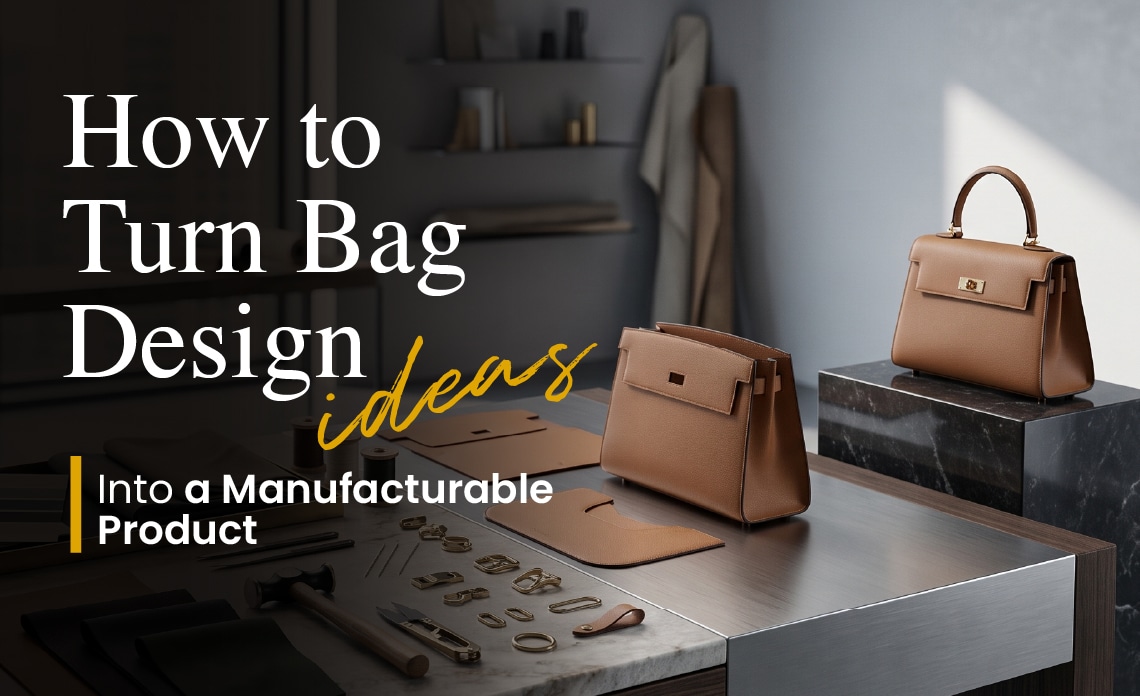
To turn bag design ideas into a manufacturable product, brands must balance consumer needs, brand identity, and manufacturing feasibility early in the development process. While every successful bag starts with a great concept, bringing it to life requires evaluating its commercial viability before production begins.
In this guide, we’ll explain how leading brands evaluate bag design ideas and transform them into products ready for production.
What Makes a Bag Design Commercially Successful?
A beautiful design may attract attention, but a commercially successful bag creates value for both the customer and the brand. Before production, leading brands evaluate every bag design idea to ensure it is functional, commercially viable, and suitable for manufacturing.
- Understanding Consumer Needs Before Designing
Great bag design begins by understanding the people who will actually use the product. Rather than asking, “What looks fashionable?” experienced brands ask:
- Who is our target customer?
- How will they use the bag every day?
- What problems can this design solve?
For example, a work tote designed for professionals may need to fit a laptop, provide organized compartments, and remain lightweight despite its size. Meanwhile, a crossbody bag for travel may prioritize security, comfort, and easy access over decorative details.
- Designing for Brand Identity and Market Demand
Every bag design communicates something about a brand. The choice of silhouette, leather texture, hardware, stitching details, and color palette all contribute to how customers perceive the product.
- Luxury brands often emphasize timeless elegance through clean lines, premium materials, and understated branding.
- Contemporary brands may focus on bold colors, unique shapes, or multifunctional features that appeal to younger audiences.
However, design decisions should never be based solely on personal preference. The strongest products are those that align brand identity with genuine consumer demand. They should also reflect market demand. Questions worth considering include:
- Is minimalist design becoming more popular in your target market?
- Are customers looking for lightweight everyday bags or statement pieces?
- Is there growing demand for sustainable materials?
- Balancing Design Ambition with Production Reality
Creative freedom is important, but every design must eventually become a physical product. Some concepts look impressive in sketches or digital renderings but become extremely difficult or expensive to manufacture.
For example:
- Complex curves may require additional handcrafting.
- Multiple material combinations can increase production complexity.
- Decorative hardware may significantly raise manufacturing costs.
- Intricate construction may reduce production efficiency.
Successful brands understand that simplifying certain design elements does not necessarily reduce perceived value. In many cases, thoughtful refinement results in products that are easier to manufacture while maintaining a premium appearance. This balance between creativity and practicality is one of the most important aspects of professional product development.
- Common Design Mistakes That Increase Production Costs
Many first-time brands unknowingly create bag designs that appear attractive but become expensive during manufacturing. Common mistakes include:
- Using too many leather panels that increase cutting waste.
- Adding unnecessary stitching details that require more labor.
- Selecting hardware that is difficult to source consistently.
- Designing structures that require excessive reinforcement.
- Ignoring standard material dimensions, leading to higher material costs.
These issues often remain hidden until prototype development begins. Working closely with an experienced manufacturing partner early in the design stage can identify these risks before they become costly production problems.
“At Suvino, brands receive manufacturing guidance early in the development process, helping transform creative bag design ideas into products that are practical, efficient, and ready for production. Unlike many manufacturers, We also give brands direct access to the factory owner, enabling faster communication, better decision-making, and more precise guidance throughout product development.” — Nick (Ard-Ong Winyoopradist)
How Successful Brands Evaluate Bag Design Ideas Before Production
Before approving a new collection, established brands evaluate every bag design idea through a commercial lens. Instead of asking whether a design looks attractive, they ask whether it can succeed in the market over time.
- Does Design Solve a Real Consumer Need?
The best products solve a specific problem. A travel backpack that improves organization, a lightweight work bag that reduces shoulder strain, or a compact crossbody designed for hands-free convenience all provide practical value beyond appearance.
Customers are far more likely to purchase products that improve their daily lives than products that simply follow short-term trends. When evaluating a concept, ask yourself:
- What need does this design fulfill?
- Why would someone choose this bag instead of a competitor’s?
- Does it improve functionality without sacrificing aesthetics?
- Is the Design Commercially Viable?
A successful bag design must also make business sense. Even if customers love a concept, it may not be financially sustainable if production costs exceed the target retail price. Before moving forward, brands should evaluate:
- Material costs
- Manufacturing complexity
- Estimated production time
- MOQ requirements
- Target retail pricing
- Expected profit margins
- Can the Design Stay Relevant Beyond Seasonal Trends?
While trend-driven products can generate short-term excitement, timeless designs often deliver stronger long-term returns. Many luxury brands build collections around signature silhouettes that remain relevant for years while introducing seasonal updates through colors, materials, or hardware finishes.
This strategy allows brands to:
- Reduce development costs
- Simplify inventory management
- Strengthen brand recognition
- Increase customer loyalty
Why Prototyping Saves Time and Production Costs
Prototyping is the process of creating a sample bag before full production to test design, structure, materials, and functionality.
It saves time and production costs because it helps brands identify design problems early, such as weak structure, inefficient material use, or construction issues, before mass production begins. Fixing these issues at the prototype stage is significantly cheaper and faster than making changes during large-scale manufacturing.
Prototyping also ensures better communication between designers and manufacturers, making sure the final product can be produced consistently at scale without compromising quality or design intent.
Here is a quick comparison of why identifying and fixing design issues during the prototyping phase is far more efficient than making changes during mass production:
| Impact Area | Fixing During Prototype Stage | Fixing During Mass Production |
|---|---|---|
| Cost | Low (Minor adjustments to sample patterns) | Exponentially High (Reordering materials, modifying molds) |
| Time Delay | Fast (A few days to adjust a sample) | Severe (Weeks or months to restart the production line) |
| Material Waste | Minimal (Only 1-2 samples affected) | High (Scrapping entire batches of cut leather or hardware) |
| Flexibility | High (Easy to tweak silhouette, size, or stitching) | Very Low (Changes require halting the entire workflow) |
| Business Risk | None (Safe testing and refinement phase) | Critical (Missed launch dates, budget overruns, delayed ROI) |
Why Manufacturing Expertise Matters as Much as Design
A strong bag design is important, but manufacturing expertise is equally critical in determining whether a product succeeds in the market. Even the most creative concept can fail if it cannot be produced efficiently or consistently.
- Early Collaboration Reduces Development Risks
When brands collaborate with manufacturers early in the process, potential production issues can be identified before they become expensive problems. Material limitations, construction complexity, and cost constraints can all be addressed at the design stage, reducing risk and improving overall efficiency.
- Faster Product Development Through OEM Expertise
Experienced OEM manufacturers understand how to optimize workflows, select appropriate materials, and streamline production steps. This expertise helps accelerate development timelines while maintaining design integrity, allowing brands to bring products to market faster without sacrificing quality.
- Consistent Quality Across Every Production Batch
Manufacturing expertise ensures that quality is not limited to the first sample. Consistency across every production batch is essential for building brand trust. Proper process control, skilled craftsmanship, and standardized production systems all contribute to delivering uniform quality at scale.
How Suvino Helps Brands Bring Bag Design Ideas to Market
At Suvino, we support brands throughout the entire development journey, from concept to final production. Our approach combines design understanding with deep manufacturing expertise, helping transform bag design ideas into commercially viable products.
- Expert Consultation from Design to Production
Brands receive direct guidance on design feasibility, material selection, and construction methods. This helps ensure that every concept is both creative and practical for manufacturing.
- Flexible Manufacturing for Growing Brands
Suvino supports brands at different stages of growth, from small initial runs to larger production volumes. This flexibility allows businesses to scale gradually while maintaining control over quality and cost.
- Consistent Quality with Global Production Standards
Every product is developed under strict quality control systems aligned with international standards. From material sourcing to final inspection, each step is managed to ensure consistency, durability, and premium finish across all production batches.
Frequently Asked Questions
Q: How early should I contact a manufacturer when developing a bag design?
It is best to contact a manufacturer at the concept stage, before finalizing your design. Early input helps ensure your bag design is practical, cost-efficient, and suitable for production from the beginning.
Q: Can I produce a small batch before scaling up?
Yes. Many OEM manufacturers support small production runs to test the market. This allows brands to validate their bag design, gather feedback, and make improvements before scaling to larger volumes.
At Suvino, the minimum order quantity starts from 120 pieces for genuine leather bags, 200 pieces for synthetic leather bags, and 200 pieces for wallets and small leather goods.
Q: What factors affect the final production quality of a bag?
Final quality depends on multiple factors, including material selection, construction methods, manufacturing expertise, and quality control systems. Even a strong bag design can vary in quality if these elements are not properly managed.
If you are developing a new bag collection, early collaboration with an experienced manufacturer can significantly improve both design outcomes and production efficiency. At Suvino, we help brands refine their bag design ideas into manufacturable products through expert consultation, prototyping, and production support.
Contact our team to discuss your project and explore how we can bring your ideas to market with confidence.
………………………………………………………………………………………………………………
“The finest handcrafted leather goods in Thailand” – Suvino
With the widest leather selection in the country, Suvino combines refined craftsmanship and deep expertise backed by over 37 years of experience.
Address: 1 Moo 3, Tambol Lak6, Amphur Muang, Pathumthani 12000, Thailand
Map: https://goo.gl/maps/VLvXegPSNEeSacGo9
Tel: 0925969559, 025363542-3
Email: [email protected]
Facebook: suvino รับผลิตกระเป๋าหนังแท้
Inbox: https://m.me/suvinocorp